


How to Keep Your Data Science Meetup Sustainable - posit::conf(2023)
Presented by Ted Laderas Many data science meetup organizers struggle with burnout. It can be daunting to plan a meetup schedule, especially with the added burden of work and life. In this talk, I want to highlight some strategies for keeping your data science meetup sustainable. Specifically, I want to highlight the role of self-care in growing and sustaining your group, as well as low-key activities like a data scavenger hunt, watching videos together, styling plots together, and sharing useful tidyverse functions. By making it easy for your members to contribute and empowering them, it takes a lot of the burden off you as an organizer. You don't need to reinvent the wheel for meetups or have famous guests for each one. Let's start the conversation and make your meetup last. Presented at Posit Conference, between Sept 19-20 2023, Learn more at posit.co/conference. -------------------------- Talk Track: It takes a village: building and sustaining communities. Session Code: TALK-1129
image: thumbnail.jpg
Transcript#
This transcript was generated automatically and may contain errors.
Today, I want to talk about data science organizer burnout. And part of the reason I want to talk about this is that I think this is kind of a common experience and the more we talk about it with each other, the more we can kind of get better.
So if you feel like you want to share your burnout story, please share it on Slido if you like. This is a pretty short talk, so there's plenty of time to kind of share stories and things.
So who am I? So I am a community organizer, obviously. So right now, I co-organize Portland R user group. But I've done other organizations, such as the Cascadia R Conference, which is continuing its sixth year, which is awesome. And when, like I started with a group, like I co-founded called Oregon Health and Science University Biodata Club. So that's who I am.
But I spent a lot of time talking with community organizers. So this is really the collective wisdom of everyone.
The COVID burnout experience
So let's start. And I was talking with my other fellow speakers. It seems like everyone has a COVID story. This is my COVID story. So 2020, COVID happened. And it proceeded to make all of us miserable. It made us all isolated.
And as a result, just me, this is me, but I think a lot of organizers had the same experience. And these are all kind of symptoms of burnout, feeling like you're alone, that what you're doing is not enough, and what you're doing is not helping people.
So one thing I will recommend if you're experiencing burnout is start questioning it. So that's where I started was basically saying, how can I fight my burnout? And more importantly, it felt like organizing was a drain on my energy. So I wanted to kind of rethink things and say, how can I get energy from organizing? And the most important thing, and I think this is kind of part of the moral of this talk is, how can others help?
Envisioning a sustainable meetup
So let's take some time to vision what's possible. So what if your meetup required less planning from you? What if your members pitched in? And what if you had support? So I'm going to call this a sustainable meetup.
So if you are an R person, this is the formula. So you take your meetup, and then you pipe it through self-care, taking care of yourself. Then you found a core group, and then you make your group welcoming. So if you're a Python person, don't worry. I wrote it in Python syntax as well.
Taking care of yourself
So let's talk about taking care of yourself. So really, all of these negative things in your head, you need to stop that. Because it's what prevents you from connecting with people and asking for help. So what instead? So reframe all of those thoughts. It's not just you.
I just saw Barbie, so it is Knuff. And you are helping people. But the thing to remember is that you come first. So I think one of those things is a lot of meetup organizers are people pleasers. And they want to send out doodle polls and make everyone happy, finding the ideal time. You don't have to do that. Make yourself happy, because especially if you're a volunteer, you're not getting paid. You need to make it easier on yourself.
So the other side of this, and I think this is the key to my talk. I'll say that probably multiple times. But it's OK to not know everything and to admit your vulnerability. Asking someone to help is really the core of establishing a community.
So I am going to read this out loud, because I think it's just so important. So this is Adam Grant. If you're familiar with him, he does a lot of talking about work and how we can make work not suck. So he says, admitting that we have something to learn doesn't just show humility. It improves relationships. When we acknowledge that we don't know everything, others feel more psychologically safe and become more effective. So expressing our desire to get better can help others get better.
So he says, admitting that we have something to learn doesn't just show humility. It improves relationships. When we acknowledge that we don't know everything, others feel more psychologically safe and become more effective.
So really, the key I want you to remember is that you're not alone. And this vulnerability is going to connect you with other people.
Building a core group
So we talked about taking care of ourselves. So let's start talking about building a core group. And this was advice that just came from multiple organizers, is to start small. And we'll talk more about that in a little bit. So a core group, you share interests. We all like data. And some of us want to discuss it.
And part of the advice that I got from almost everyone is don't organize alone. And part of the reason for that is when each other is feeling burned out, the others can help support them.
So how do you find this core group? And I just went through the Our Ladies organization guide. They have a lot more advice on this. This is just my little bit of advice. So I think it's really, it's a lot of people put out a call, like if anyone wants to help. I think if you want to build a core group, I think you should ask people directly. I think it's one of those things that forms a strong connection. And people are really glad that you thought of them.
So now you've established this core group. So let's talk about your values as a group. And so remember, we talked about vulnerability is important. Values are also important. So us at Portland, our user group, our values are we want to learn together. And that kind of informs everything that we do. But we also want to be fun. And we want to welcome beginners. So that also informs all of our communications. We try to make it as encouraging to beginners as possible.
This is just a note. So I know a lot of you do internal meetups for an organization. So I just want to make a pitch that you ask your boss to give you some protected time. Because this is a lot of work. You're putting a lot of emotional effort. And you're connecting people. You need to get buy-in from the higher ups.
Making your group welcoming
So I think I'm just kind of zooming through this talk. That's fine. So let's talk about making your group welcoming. And I also want to kind of end with some examples of activities that are kind of low risk and high reward.
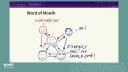
So you have your core group. And like almost everyone, I said, that core group is going to grow either by word of mouth. And slowly, people are going to start joining your group.
So one thing that I spent a lot of time kind of talking and researching with people was, how do you make a group psychologically safe for everyone? And this is core to kind of welcoming people. So the formula I kind of came up with is, safety is values plus code of conduct.
So there's been a lot written about code of conduct. And if you go to the website, there'll be a link later. There's going to be lots of links to codes of conduct and how you should think about them. So codes of conduct really address kind of the unacceptable behavior. But I think the other side is that you have to encourage values. And because values are what kind of drive positive behavior. So it's not just a code of conduct. It's also making people feel like they're valued and expressing those values.
Low-risk, high-reward activities
So let's kind of end with activities. And I think one of the things that will help alleviate burnout is making it easy for other people to contribute. And I loved Reva's example of making our ladies modular. Because I think all groups have people who want to help. You just have to make the way for them.
So one of the easy, low-risk kind of activities, I think almost every organizer has done, is lightning talks. So lightning talks are great. But I want to just kind of show this is something that we do at Portland, our user group. And part of our goal is just to help each other. So we do this thing. This is kind of our default activity. And it's called aggregate. And all of us kind of come in with issues or problems we want to solve or something we want to share. And oftentimes, none of us, we don't know anything about it. But collectively, we can figure things out.
And I think that's one of the most fun things about Portland R is that kind of collective knowledge and sharing with each other. So this is just an example. So what we do, it's a pretty low-key way to kind of organize a meetup. We basically may have a short talk or demo. But then we basically, you can see this intro section, we basically ask everyone to sign in with your name and background and what you want to learn and show today. So this is something that, and then we go down the list. We try to hit as many people as possible. And we try to find answers.
This is another activity that I've done within Biodata Club, which is the idea of exploring data together. So I call it a data scavenger hunt. So this is a shiny app I developed called Burrow that lets people kind of develop these kind of basically exploratory data analysis. So this is a visualization by, oh, God. I'm forgetting Nick's name. Sorry, Nick. But this basically shows you information about the data, gives you an overview of the data. And these gray bars in each of these columns basically show missing data. So that's kind of the start of the conversation. And then we start asking questions of the data, like can we see relationships between different variables? So something like age and blood pressure. This app basically kind of gives you the ability to kind of quickly kind of iterate through a data set and find things like that.
Wrapping up
OK, so like I said, this is a pretty short talk. But just revisiting the formula, so we talked about self-care. We talked about having a core group and how that's so essential. And we talked about making our group welcoming.
And hopefully by the end, but groups are organic and they keep on growing. But hopefully what we'll have in the end is a sustainable community that supports each other and we can avoid burnout.
And this is one of the coolest things. I was talking with some organizers. And the transition from just kind of stating your values to the values becoming the norms for the group. And I think this is one of the most wonderful things about doing community organizing.
And I think this is one of the most wonderful things about doing community organizing.
So thank you. So these are all of the people I talked with. This is kind of an ongoing project for me. So I love to talk with any other data science organizers and kind of get your perspectives. And on the right, basically, that's the core group for the Portland R Group. Just R Ladies Global, I've learned so much from them. But also R OpenSci and the Center for Scientific Collaboration and Community Engagement. So they actually offer courses in this. Highly recommend. And also, this is my tribute to all of the organizers because you do important work. And I want you to know that.
So join the conversation. So there is a community organizers channel in the Discord. You know, if you'd like to kind of introduce yourself, I'd love to talk with you. So the website here, this is a QR code. But it's also at bit.ly slash meet dash burn. And this is my information for connecting. And thank you very much.
Q&A
All right. Thank you, Ted. We've got a couple of minutes, which is good because you've got a bunch of questions. Oh, great. So first up, do you see burnout as more about a lack of connection or motivation or a loss of wellness more than simply overwork?
Wow. That's a deep one. What I would say is that there are, the thing I didn't talk about burnout are the systemic elements, like culturally, like if you're in a group that prizes over work. But I think I would hedge my bets and say it's kind of both and including the systemic part. Hopefully that is a good answer.
It's a fantastic answer because it's your answer. All right. Next up, how do you handle being an organizer or becoming one if you are a serious introvert?
This is a really good one. I think part of it, and this is something that I've learned over a lot of time, is kind of if you're an introvert, you're very good at inhabiting a role. And so kind of figuring out what that role is for yourself is one of the ways that you can be very outgoing. To me, I kind of think of it like a mask or a costume or a uniform. And that helps me kind of reach out and interact with people. I think also just realizing that there's all of these dependencies and people want to connect with each other is having that kind of positive attitude. But yeah, I have a lot to say about introversion. And it's taken me kind of a long time to even get to this point. But yeah. So please, please reach out. And we can talk more about it.
All right, shout out to all the introverts in the room. We see you.
All right, last one on our list. So serial organizers seem to be integral into getting things up and running. But that adds strain on just a few people. So do you think that's sort of always how it's going to be? Or can you imagine that as something that will change?
So I guess, you know, and I think the best test of an organization is whether you're able to leave it and it keeps on thriving. But it takes a lot of effort to get there. And it takes a lot of dedication for the core group. So I think a lot of the times, and I think the Our Ladies Organization Guide has a lot of thoughts on this, is like being able to kind of split things into roles and basically make sure that no one person is doing all of the work. And so yeah, basically take all of Reva's advice and make it modular.
